The transformation of an existing research library into one of Saudi Arabia's most ambitious museums
Client
Saudi Arabia Museums Commission
Programme
Contemporary Arts Museum
Project Lead
Michal Wojtkiewicz, Monika Bilska
Year
2020 - 2026
Introduction
We completed one of the most ambitious cultural adaptive reuse projects undertaken in Saudi Arabia to date: the Black Gold Museum, on the KAPSARC campus in Riyadh. Spanning 6,800 m² across four storeys, the museum explores the transformative story and influence of oil on humanity through the lens of modern and contemporary art.
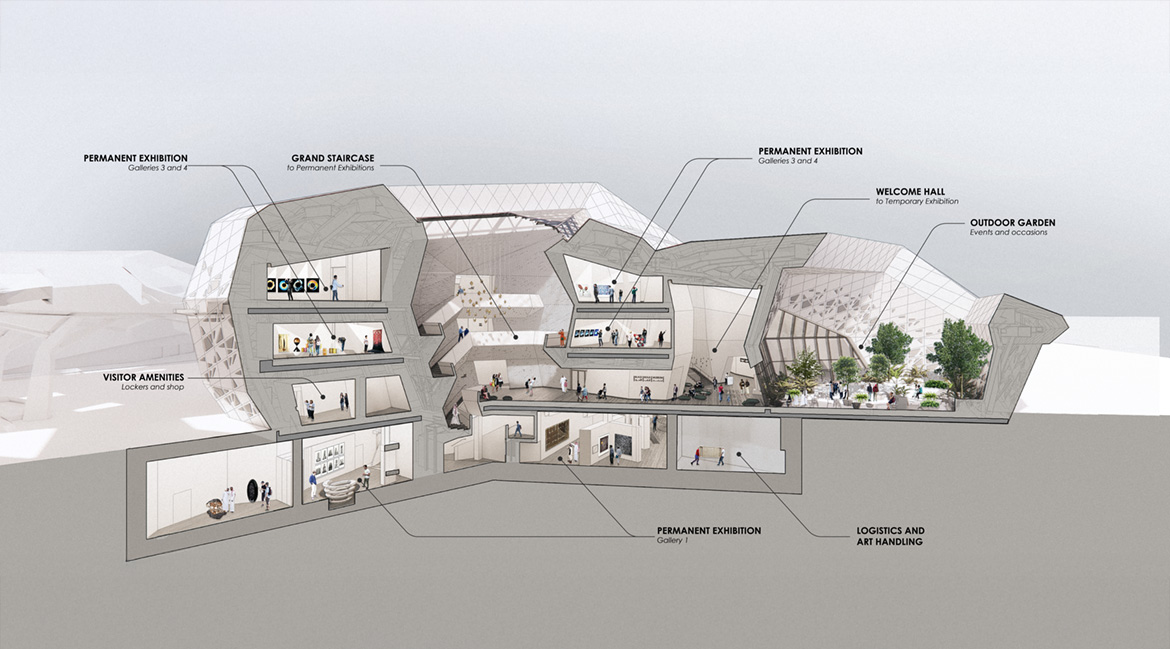
Rather than construct a new building, we transformed an existing research library — completed in 2017, and which DaeWha Kang had earlier worked on as design director at Zaha Hadid Architects — into a contemporary art museum. Of the total 6,800 m² gross floor area, only 440 m² of new structure was added: 6%. These limited insertions establish the museum's primary circulation, allowing the former library to become a major art museum with minimal structural intervention.
Architectural Concept
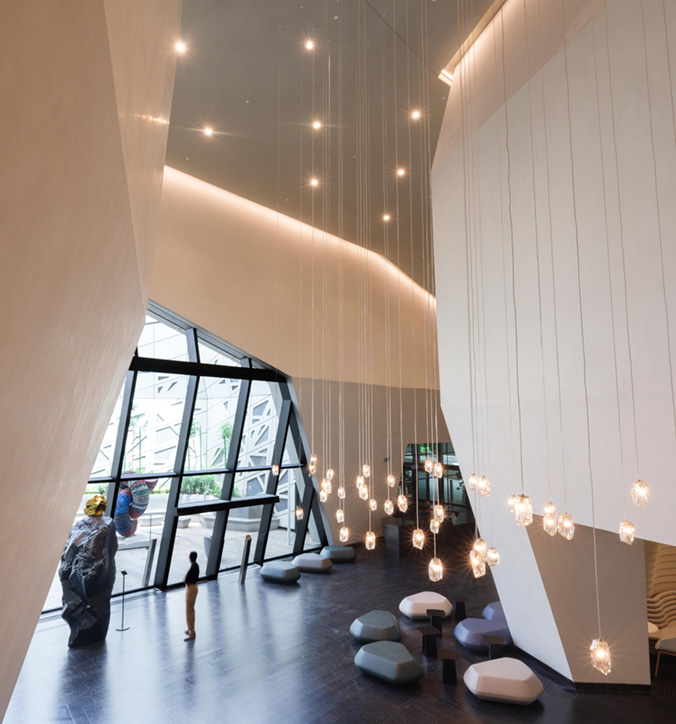
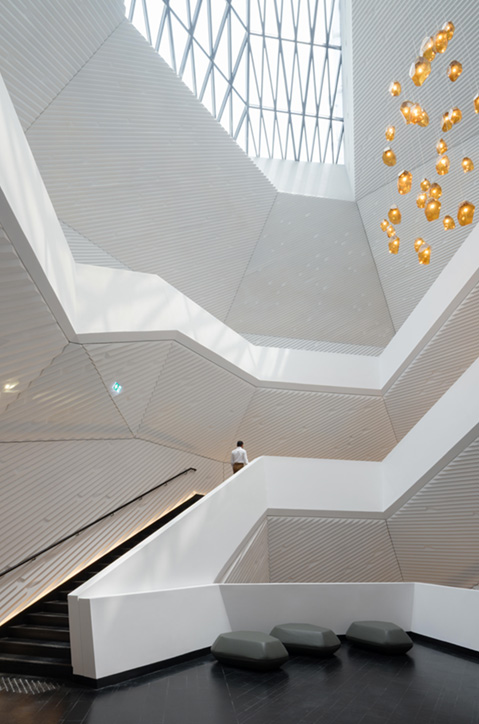
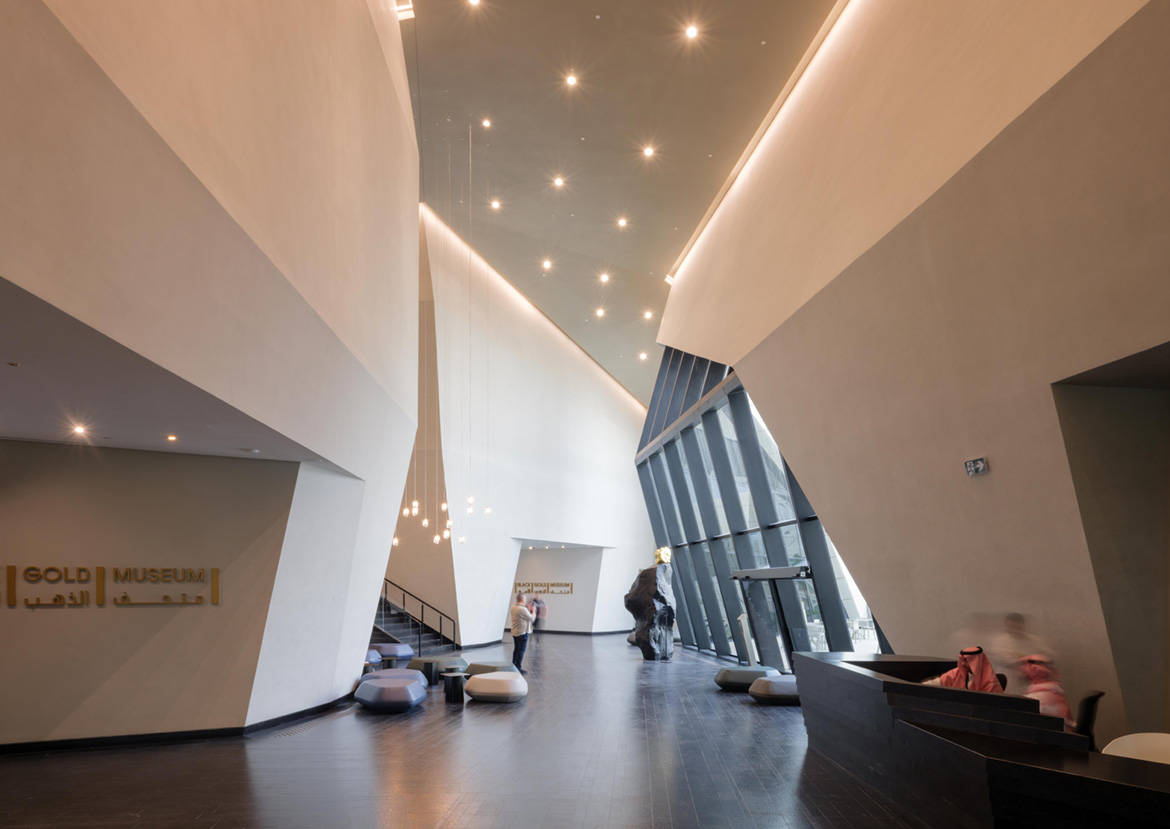
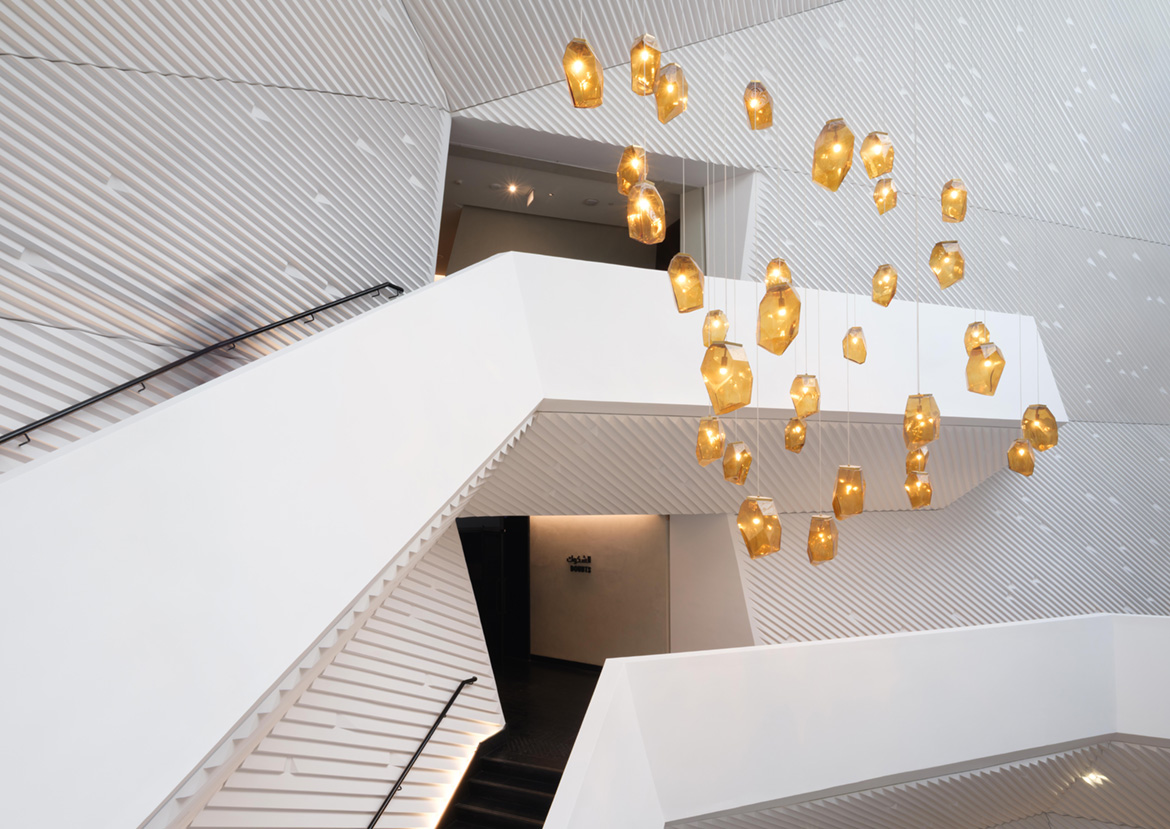
The interior architecture introduces a new central atrium and sculptural spiral staircase, forming the building's spatial and experiential core. Previously enclosed areas now draw abundant natural daylight, improving openness, visibility, and orientation. The layout supports a clearly curated visitor journey, guiding guests from basement to fourth floor and back, with every movement choreographed to create a sense of discovery.
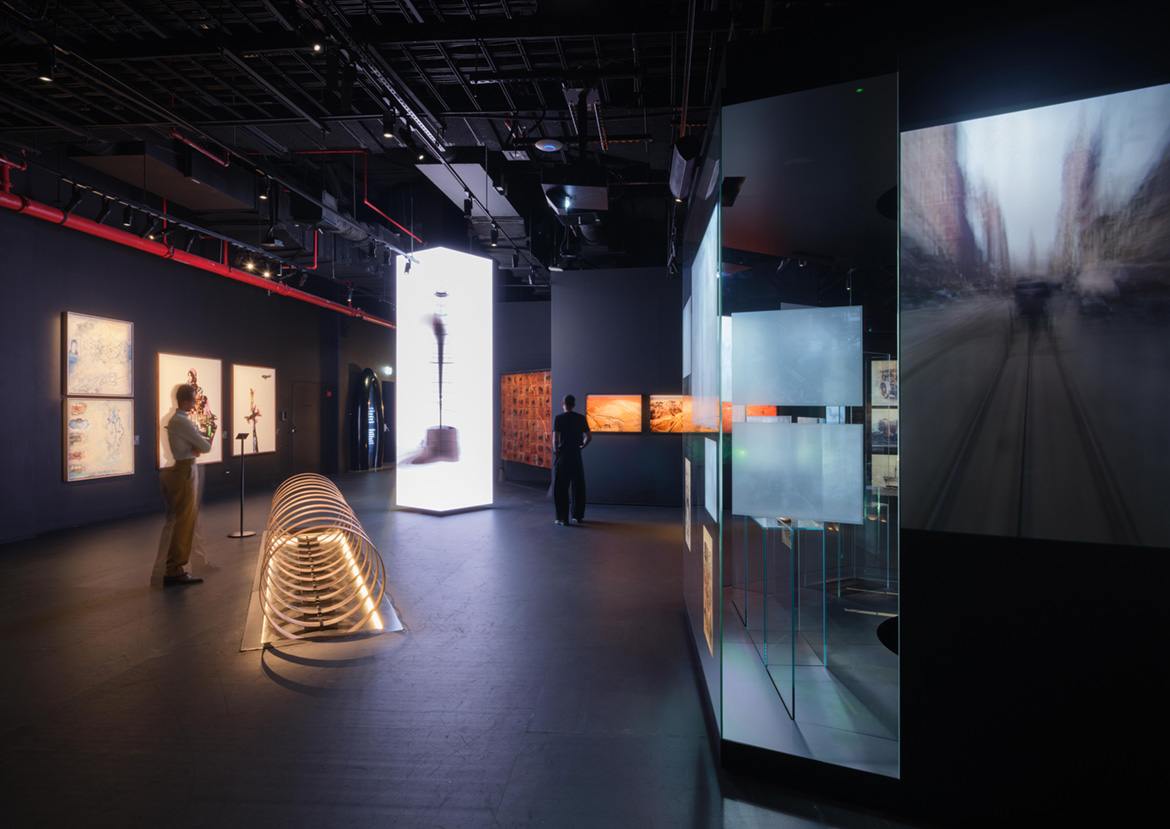
The interiors now hold museum-grade lighting, 14 gallery spaces, back-of-house facilities, and advanced climate control, supporting the conservation and display of more than 350 artworks and major installations.
Material Palette
The material palette draws on Saudi Arabia's geology — wadis, canyons, and sedimentary formations — while subtle references to hydrocarbon molecular structures inform patterns and spatial rhythms. Hexagonal geometries link natural formations with scientific systems, echoing KAPSARC's architectural language. Together, the materials and spatial language anchor the museum in local identity while contributing to global conversations on energy, society, and culture.
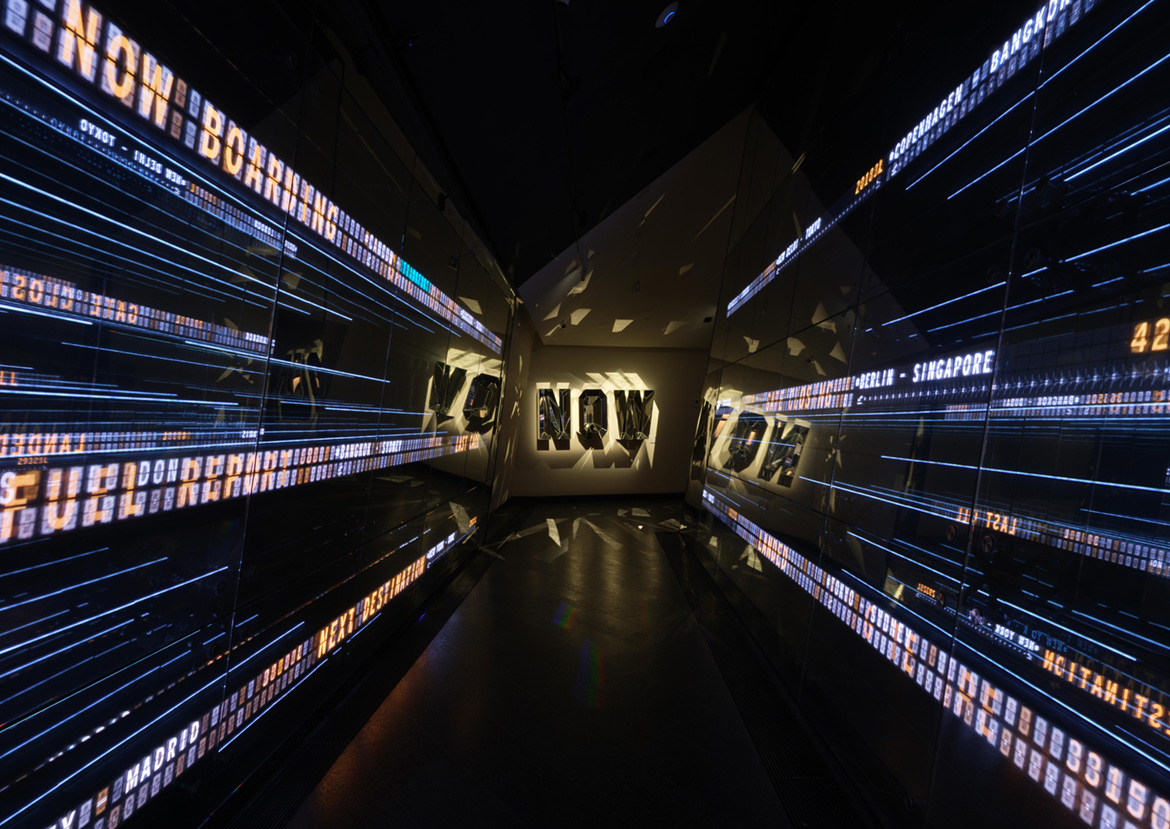
We worked closely with the museum's museography and scenography teams so the interior architecture reinforces curatorial storytelling as well as meeting the functional demands of an art museum. The four thematic galleries — Encounters, Dreams, Doubts, and Visions — are shaped by light, materials, proportion, and rhythm, each a distinct spatial experience guiding visitors through the evolving story of oil's impact on humanity.
Encounters — the discovery of oil and its early uses in the mid-19th century, and how it accelerated industrialisation, machines, and automation.
Dreams — how oil became a resource that reshaped societies and fuelled ambitions for economic development.
Doubts — critical reflection on the consequences of oil: environmental crises, consumer culture, and the paradoxes of dependency.
Visions — a forward look at current challenges and emerging solutions, with an ongoing programme for dialogue and discovery.
"Transforming the former library into a museum required a complete rethinking of how people move, gather, and encounter artworks within the building. Our aim was to bring clarity and rhythm to the existing geometry, creating a sequence of spaces that guides visitors intuitively while giving each gallery its own identity. This project brought together our experience in adaptive reuse, scenography, and human-centred design."
— DaeWha Kang, Founder and Director
Sustainability is central to the design. Preserving the façades and structural frame, with minimal demolition, significantly reduced embodied carbon, material consumption, and construction waste. We prioritised durability and operational efficiency throughout — from terrazzo and polished plaster finishes to museum-grade climate control and robust backup power. Integrated back-of-house infrastructure, including art handling, logistics, quarantine, and workshop facilities, supports efficient long-term operations.
We use cookies to ensure that we give you the best experience on our website. If you continue to use this site we will assume that you are happy with it.