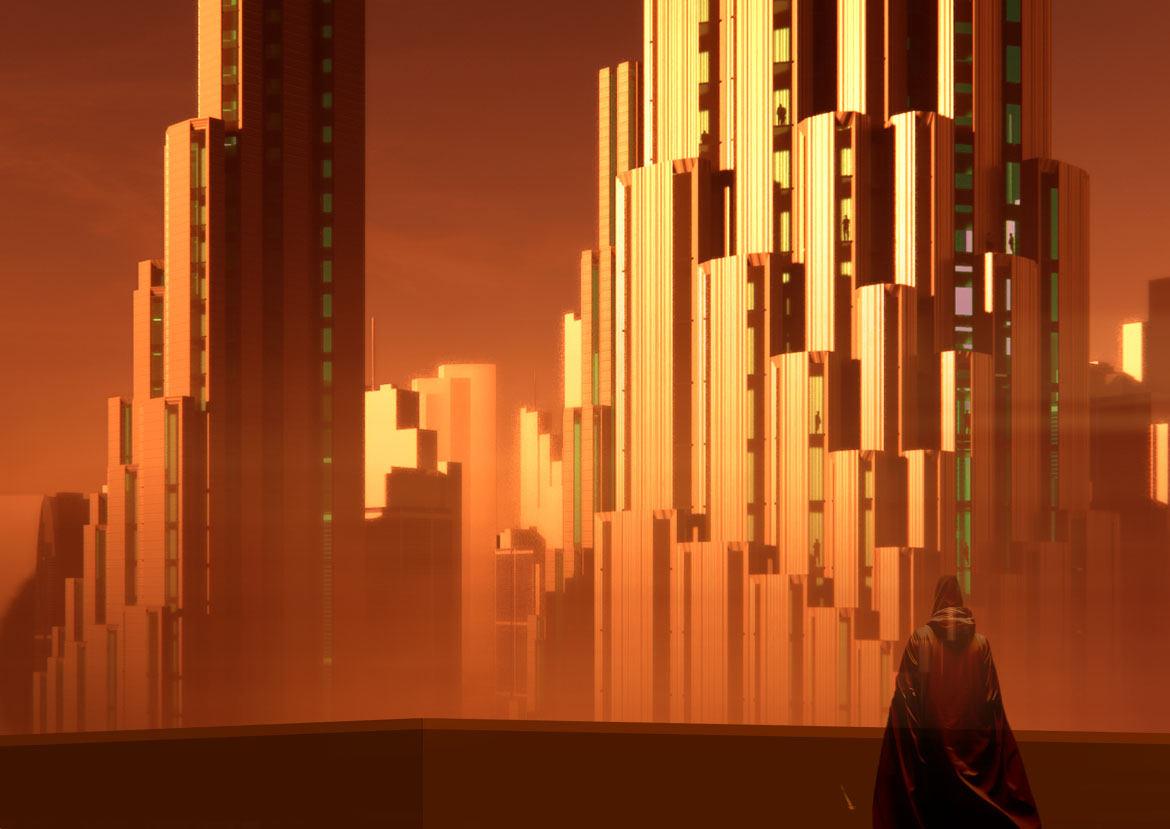
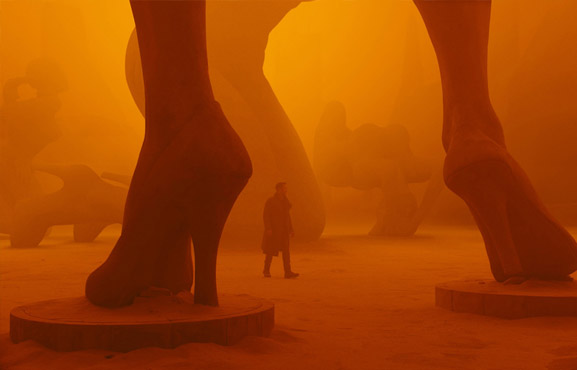
Developing architectural identity concepts from the futuristic world of Blade Runner.
Client
Spatial.IO
Programme
Metaverse Architectural Identity
Project Lead
Eduardo Camarena
Year
2023
Introduction
DaeWha Kang Design was commissioned to create architectural identity concepts for virtual communities on the Spatial.IO metaverse platform.
The brief called for spaces translating the language of the Blade Runner film world. Extended design research established a language of retro-futuristic architecture while maintaining the timelessness, rich materiality, and transcendent quality of our studio's work.
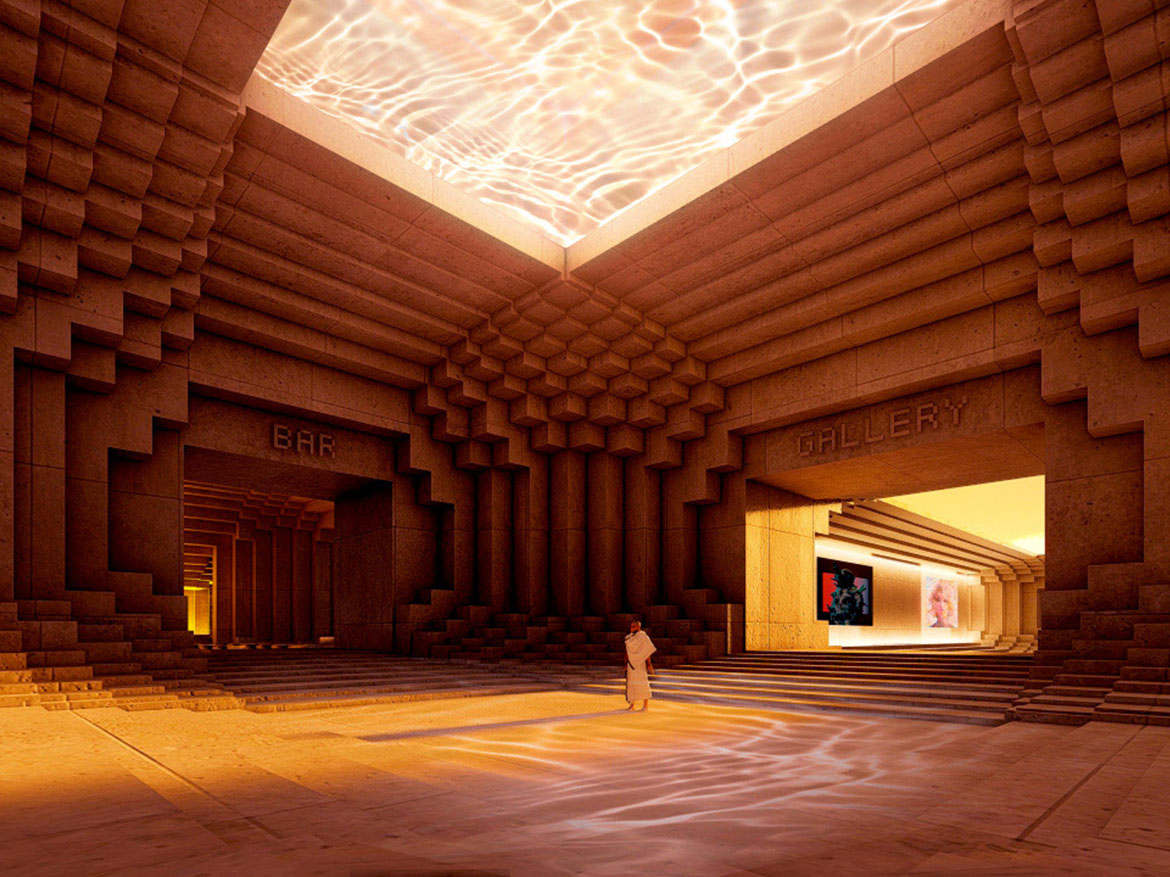
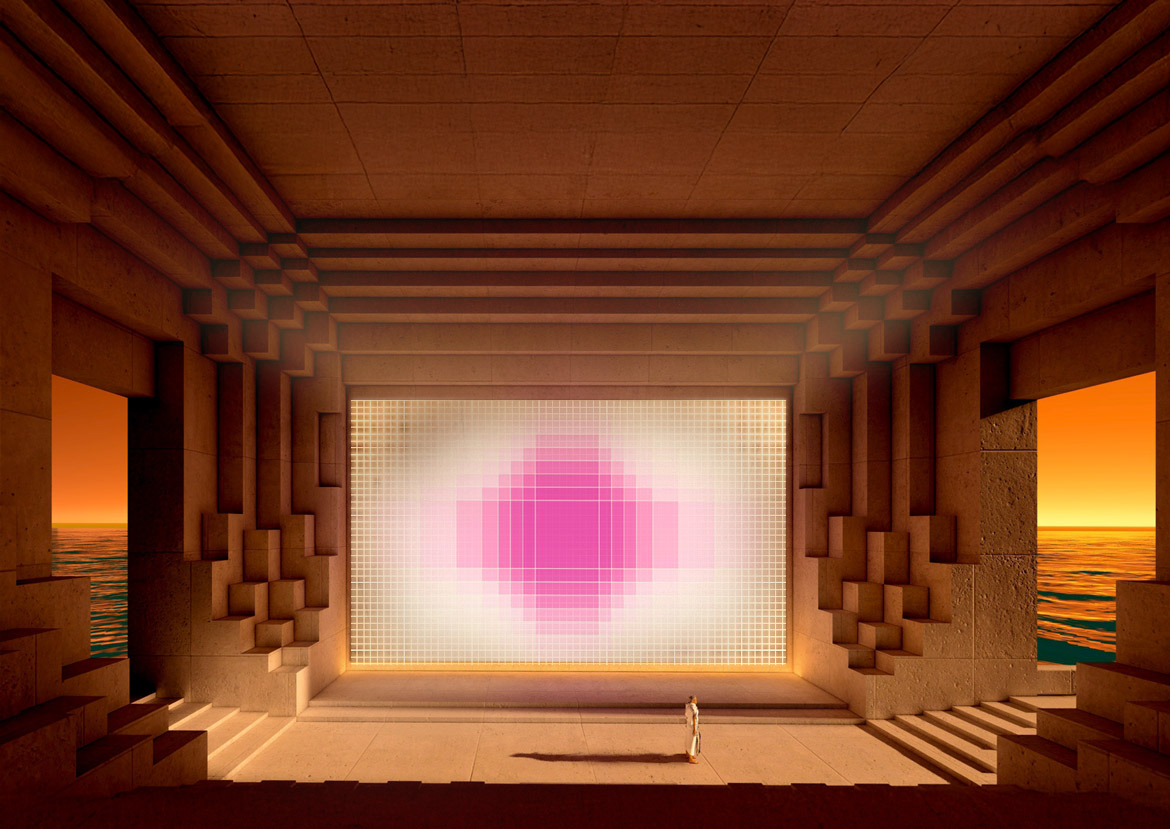
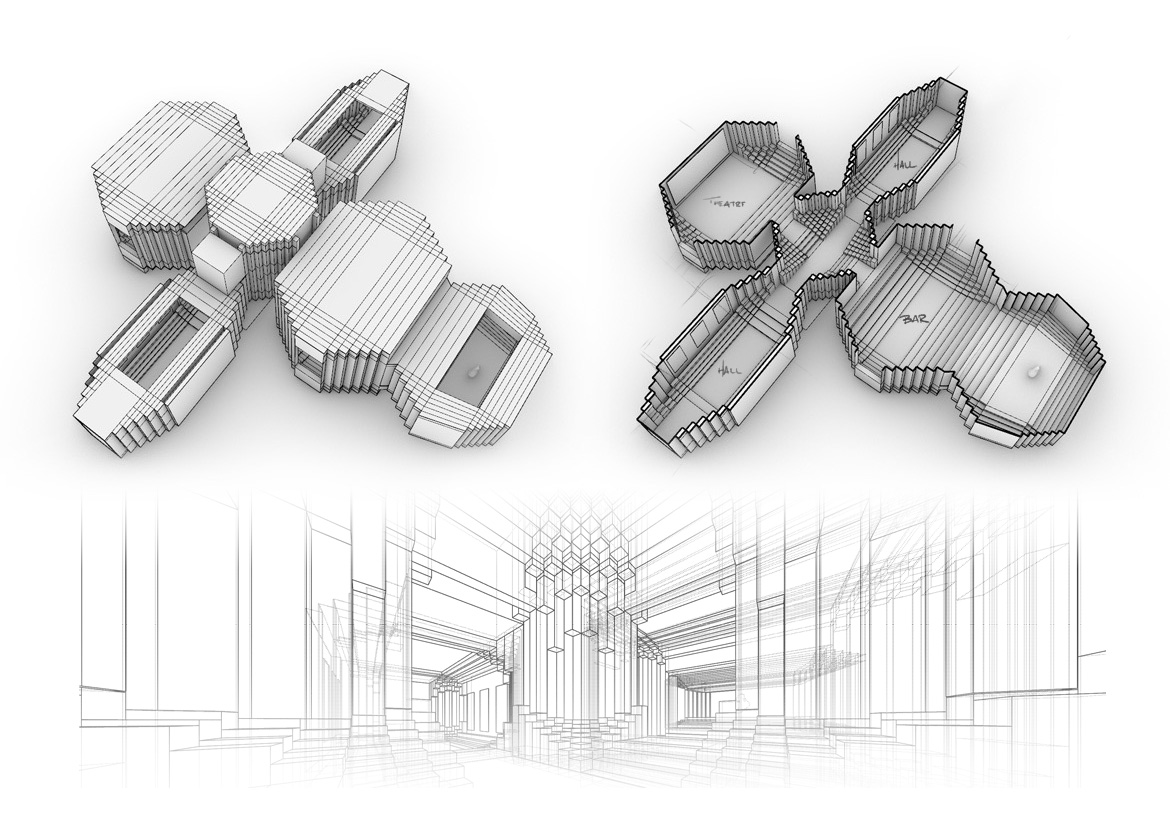
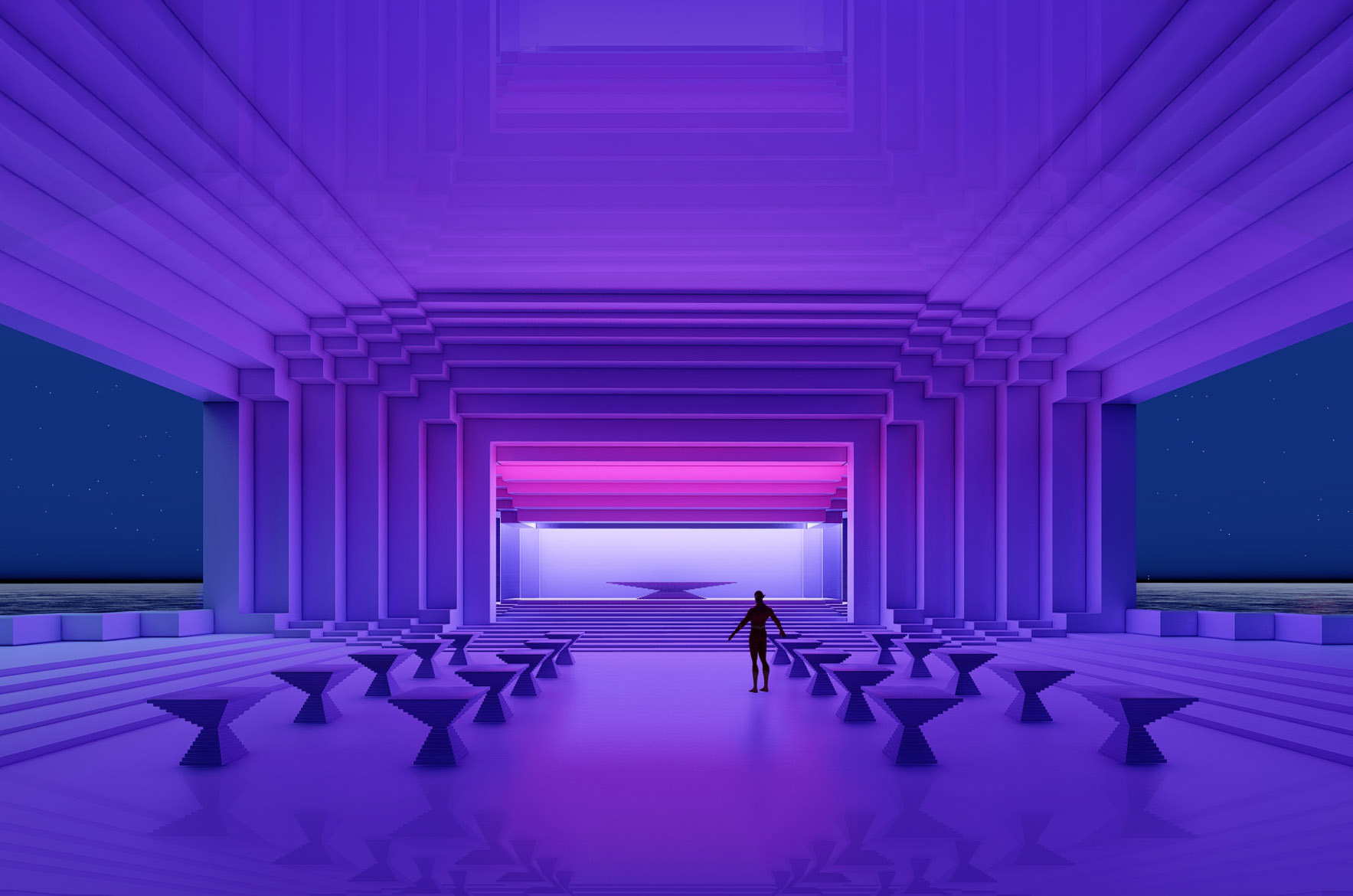
Agora is an interconnected series of open halls. The nexus is the main arrival hall, connecting long galleries, auditorium, and lounge. A key aspect of the design is achieving an environment and mood reflective of the source material.
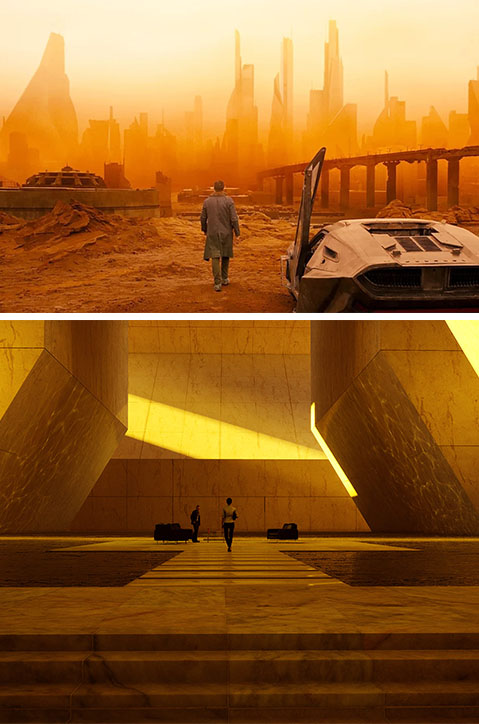
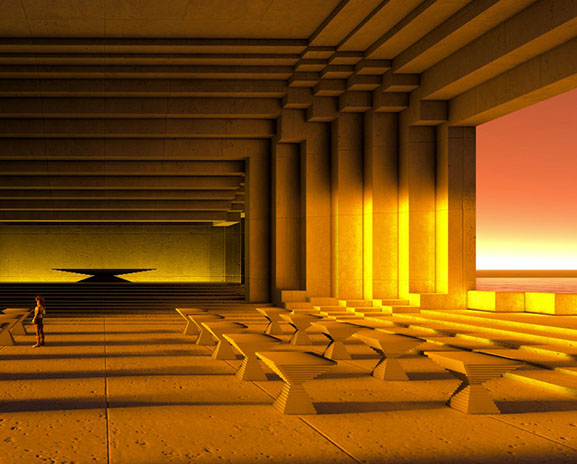
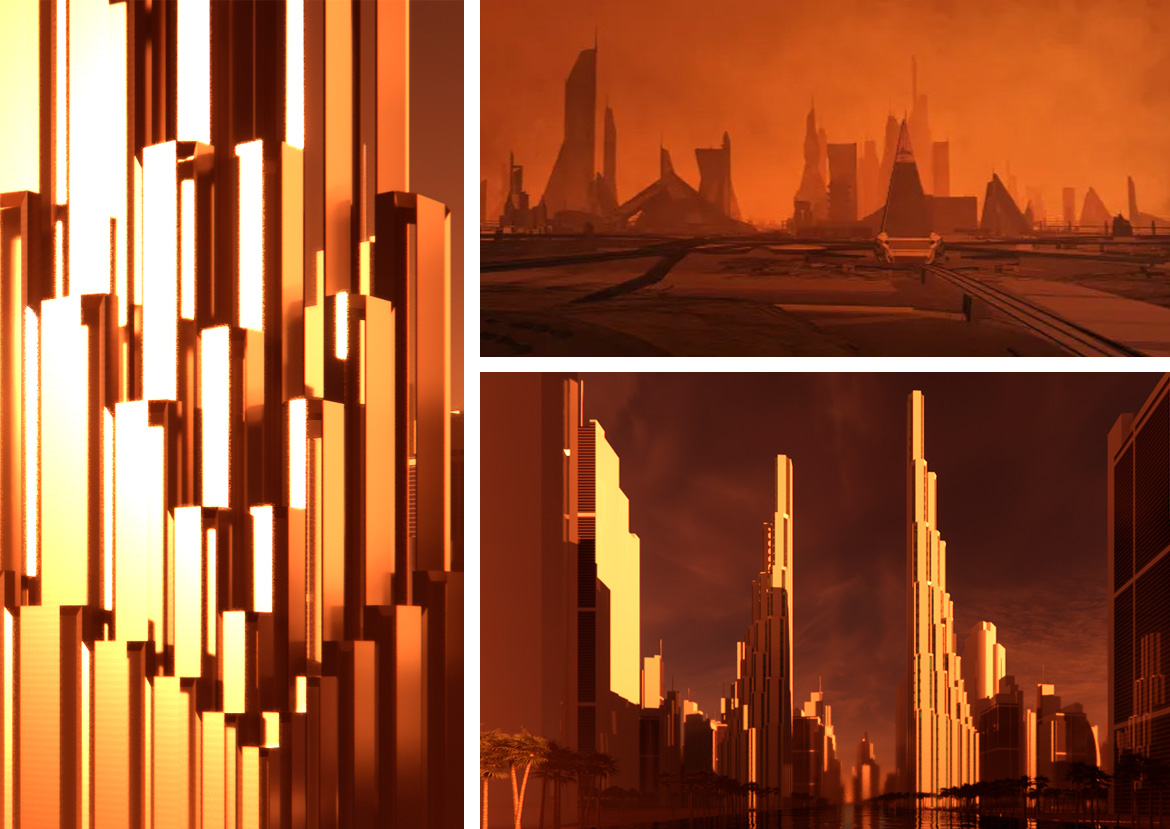
We developed spatial and material frameworks aiming for an evocation of scale and mystery. Dramatic vaulted spaces and raw primal materials imply architecture of an ancient advanced civilisation, or a deteriorating future one. Top right and lower right: Blade Runner 2049.
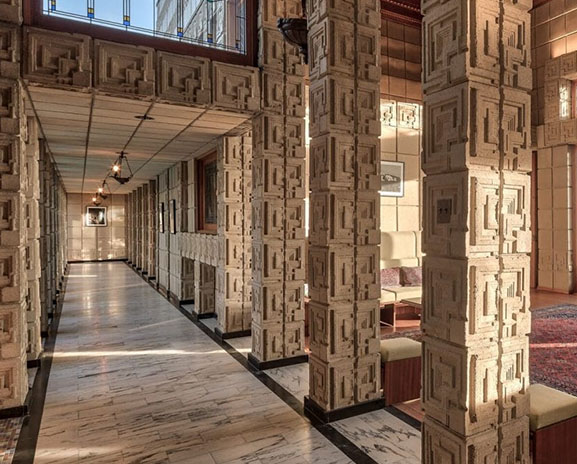
The 1982 original film took heavy inspiration from Frank Lloyd Wright's Ennis House and used it for key scenes. The rawness of Wright's ornamented cube language continues this theme of ancient and futuristic, with strong connections to the ancient Mesoamerican corbeled stone structures of the Mayan civilisation.
Our design for Agora plays on these themes, expressing these ancient stone construction techniques in a scale that would be ambitious even in the 21st century.
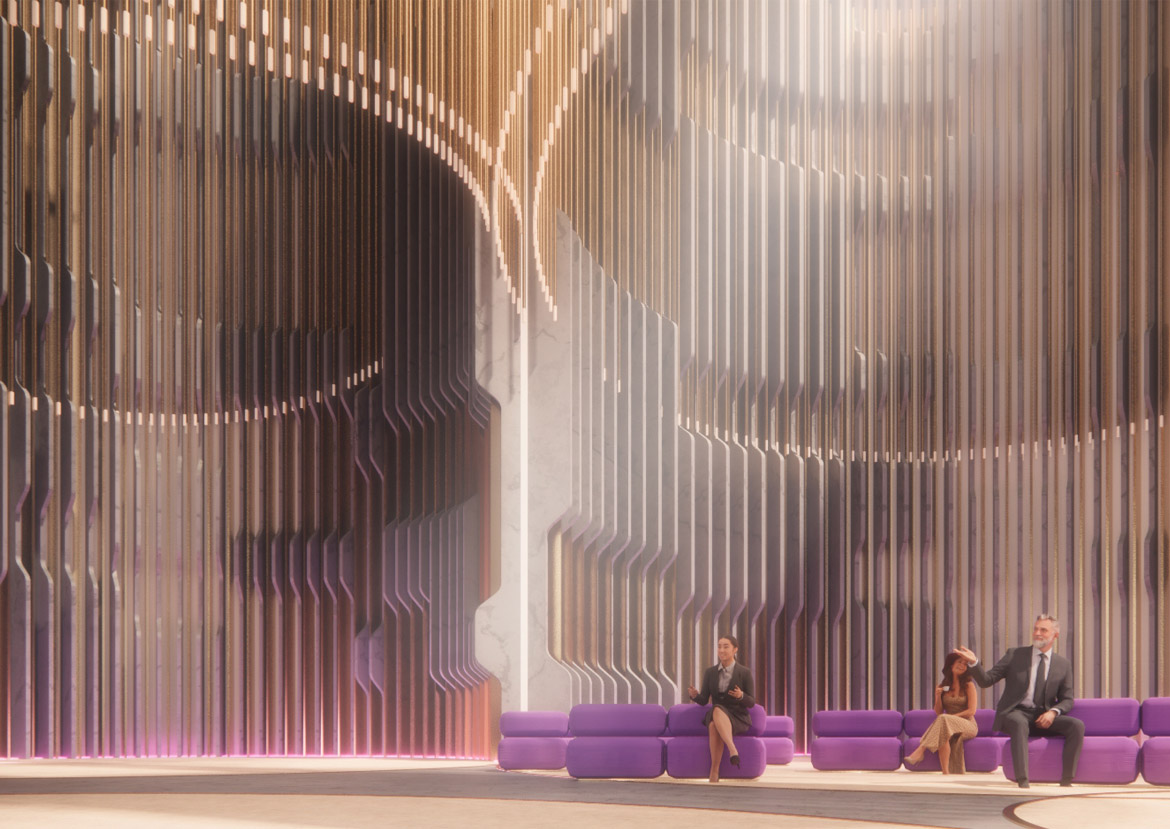
We developed a softer design language to create more habitable environments - boardrooms, lobbies, and event spaces. While the scale remains dramatic, a finer grain of detailing and the introduction of softer surfaces is more appropriate.
Vertical ribs have varying depths, creating relief patterns evoking the brutalist architectural sensibility in a softer expression. Right: Ennis House by Frank Lloyd Wright.
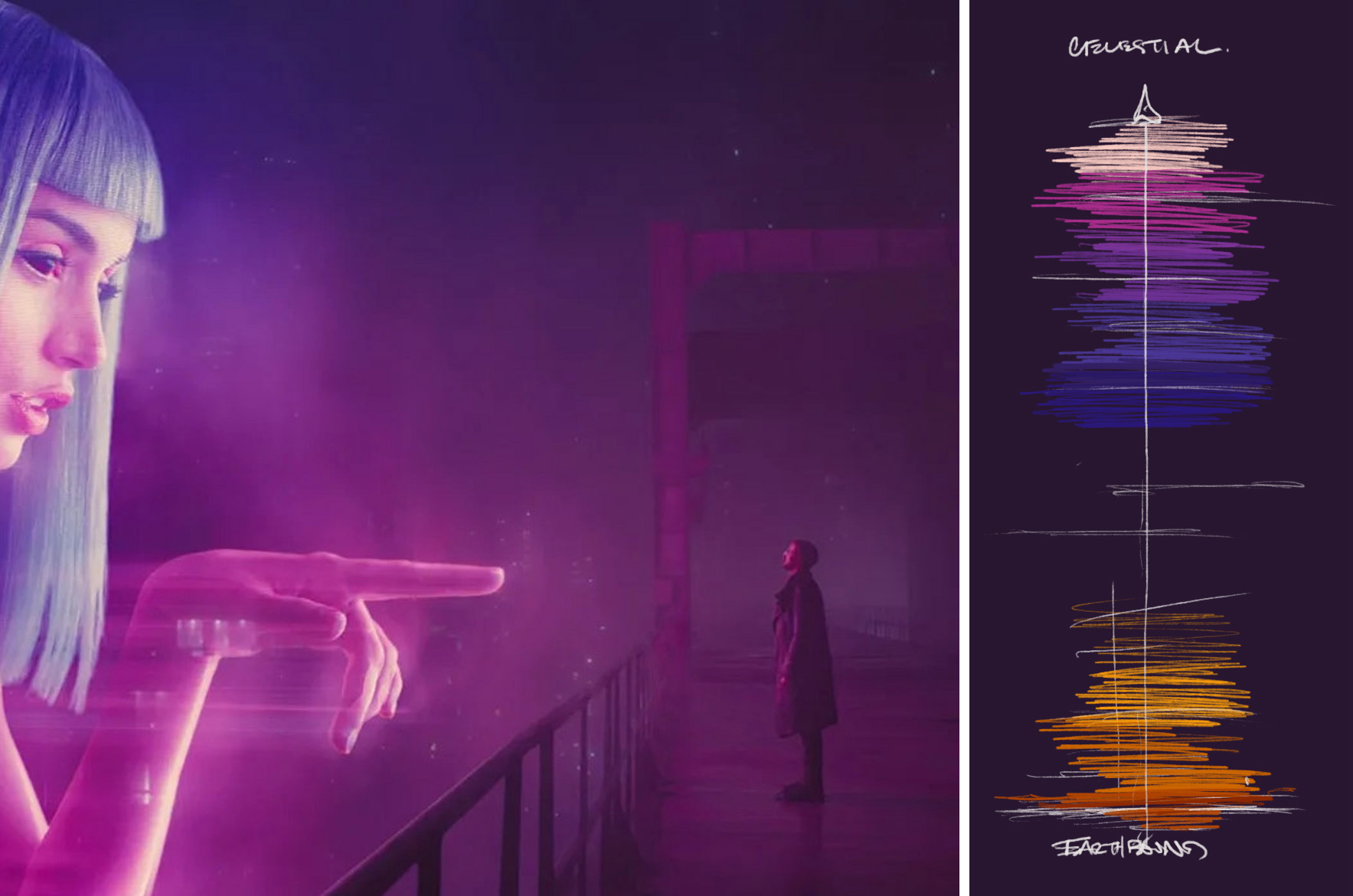
Light and colour in Blade Runner have a strong signifying function. The overburned orange light and dust in the air creates a feeling of decaying ancient power. Purples, blues, and magentas create a strong sense of future technology and dematerialisation.
The lighting and material in Agora provide a counterbalance to the harsher stone environments. White marble makes another kind of monumental - polished and reflective, cool, and tactile. Left: Blade Runner 2049.
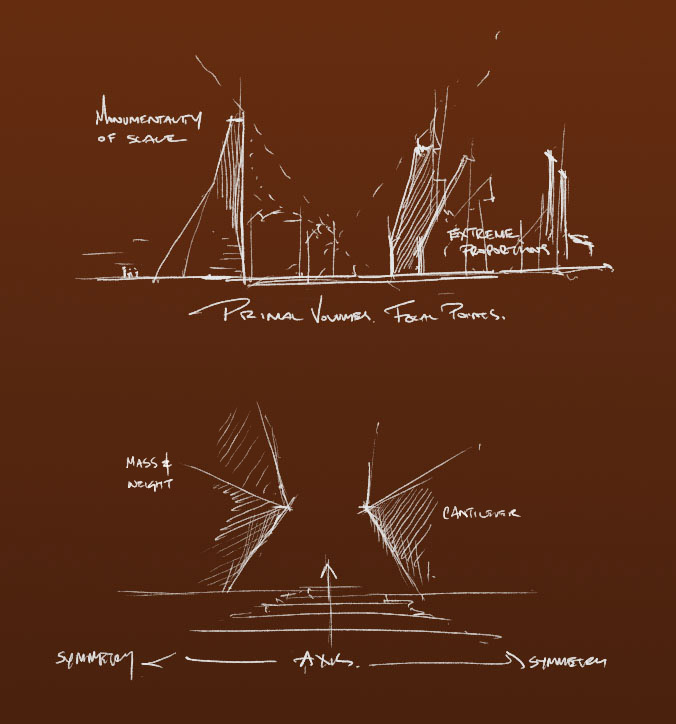
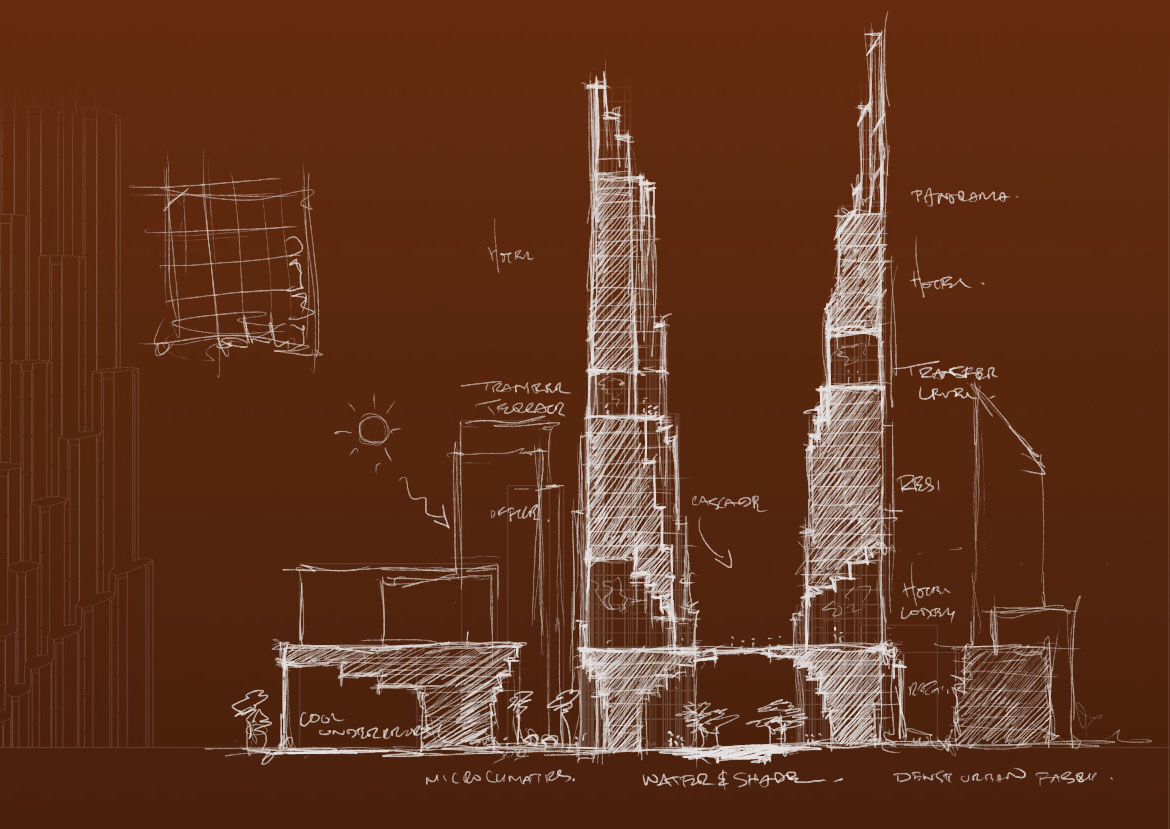
Architectural massing and design language also take cues from the source material. Tall building typologies echo the cubic, modularised style of the interior designs.
The source material evokes brutalist, primary masses, and our architectural language enhances the feeling of monumentality. Top right: Blade Runner 2049 concept art by Syd Mead.
Shared Meaning
Architectural identity rests on a diverse range of explorations of aesthetics, cultural touchstones, and collective consciousness. The studio's continuing interest in timeless architecture takes us ever further afield, looking into artistic and cultural fields for systems of thinking and shared meaning. A successful design language absorbs the source material and creates spatial typologies, material, and lighting approaches from the ground up.
Credit to Ridley Scott, Denis Villeneuve, Syd Mead, and the creative teams behind the Blade Runner imagery shown here.
We use cookies to ensure that we give you the best experience on our website. If you continue to use this site we will assume that you are happy with it.